Carney Refers Whitehorse Power Centres to Major Projects Office With Up to $73 Million for Yukon Power
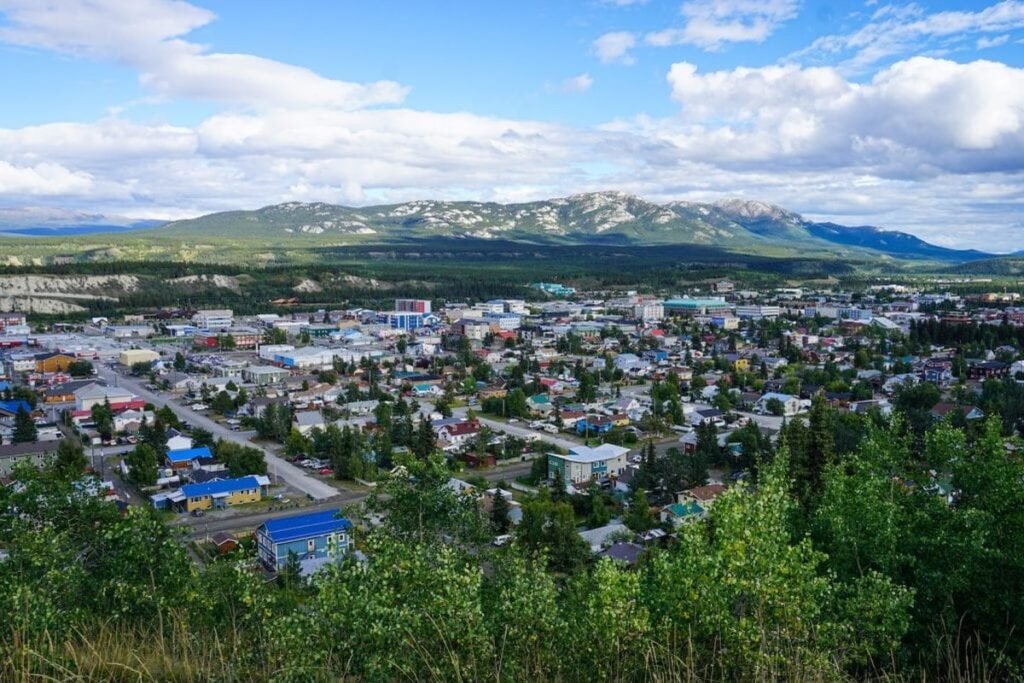
WHITEHORSE, Yukon - Prime Minister Mark Carney announced Thursday that the Whitehorse Power Centres project will be referred to the Major Projects Office, with a federal investment of up to $73 million to help meet growing electricity demand in the Yukon.
The project, proposed by the Government of Yukon, would build a minimum of two new thermal power plants, a new electrical substation and associated transmission infrastructure in Whitehorse. The initial phase would add 15 megawatts (MW) of generation capacity by 2028, with future phases expanding capacity up to approximately 150 MW.
The announcement was made in Whitehorse on November 26, 2026, alongside a backgrounder from the Major Projects Office.
Two thermal power centres for a grid under winter strain
The Yukon’s electricity grid is isolated from the rest of North America, so the territory cannot buy power from neighbouring jurisdictions when an asset fails or demand spikes on the coldest, darkest days. As the territory’s population grows and electrification increases, demand is rising, especially in winter, when extreme cold strains the system and renewable sources are limited by temperature, daylight and wind.
On an average winter day, homes and businesses connected to the Yukon grid, excluding mines, already use about 80 per cent of the power Yukon Energy can produce. During cold snaps, use can reach around 90 per cent of available capacity.
The design, planning and permitting of the first two proposed power centres on sites in Whitehorse have been submitted to the Yukon Environmental and Socio-economic Assessment Board. Further planning will refine the design, timing, scope, appropriate fuel use and location. The Major Projects Office will support the Government of Yukon in assessing grid upgrades to accommodate the increased generation and transmission, including residential and industrial demand, investment opportunities for Yukon First Nations and the private sector, fuel types and locations.
The power centres will be within the Traditional Territories of the Kwanlin Dün First Nation and Ta’an Kwäch’än Council. As assessments continue, additional Yukon First Nation Traditional Territories may be included in the project scope.
What it means for Yukoners
The project would provide reliable, on-demand power during peak winter periods, reducing the risk of outages and maintaining essential services during extreme cold. It would also support the Yukon’s economic growth with a reliable and affordable electricity supply for growing communities and industries, and create economic opportunities for Indigenous Peoples in the Yukon through participation in the energy sector, including potential equity ownership.
The up to $73 million in federal funding comes through the Build Communities Strong Fund and is expected to create local contracting opportunities and permanent jobs once the project is operational. The fund is providing $55 billion, plus $3 billion per year on an ongoing basis, for public infrastructure projects across the country.
The announcement also notes that recovering project costs entirely through electricity rates puts pressure on bills today, and that innovative financing can help get major projects built while sharing the cost burden over time.
Part of a wider northern energy push
The Whitehorse Power Centres referral sits alongside other northern projects referred to the Major Projects Office, the Taltson Hydro Expansion and the Iqaluit Nukkiksautiit Hydro Project, to support long-term economic and energy security across the North. To date, 29 nation-building initiatives have been referred to the office.
The Government of Canada is also advancing the Mayo Hydro Facility in the Yukon and the Atlin Hydro Expansion with territorial and Indigenous partners through funding proposed in Budget 2026. Together, those projects would preserve 15 MW of existing hydroelectric capacity, with the potential to add 8 MW of new capacity to the Yukon’s grid and generate 31 gigawatt hours each winter, equivalent to the annual electricity use of approximately 2,500 Yukon homes. The Atlin project, led by Tlingit Homeland Energy Limited Partnership, which is wholly owned by Taku River Tlingit First Nation citizens, would increase output from 2.1 MW to 10 MW.
The referral builds on the government’s plan to defend, build and transform the North, announced in March 2026, which includes more than $35 billion in federal investments and major projects representing around $10 billion in investment. It also follows the November 5 release of Powering Canada Strong: From Strategy to Action, the plan to double the capacity of Canada’s electricity grid by 2050. Budget 2026 proposes $1.6 billion over 10 years, starting in 2027-28, to improve energy reliability in the North, including $713.8 million for renewable energy and capacity-building projects that help Indigenous, rural and remote communities transition from diesel and fossil fuels, and $929 million to replace and upgrade aging electricity infrastructure in Northern communities.
(Source: Prime Minister’s Office, November 26, 2026)