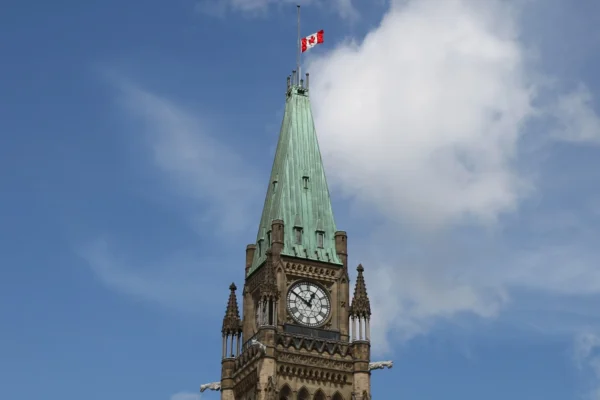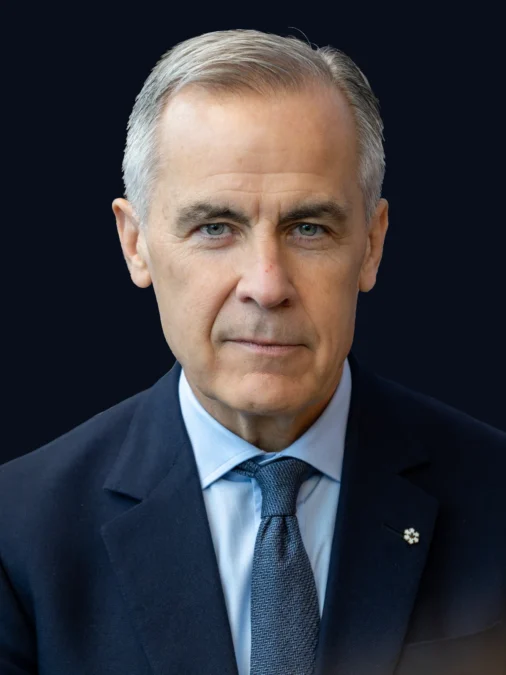
OTTAWA - Prime Minister Mark Carney has declared the Alberta question settled. In a statement issued by the Prime Minister’s Office on Tuesday, October 20, one day after Albertans voted in a provincial referendum, Carney said the province had made a clear choice on the question of separation. “On October 19, Albertans made a clear choice. They chose unity,” the statement reads. “Above all, Albertans chose Canada.” The statement notes that votes on all of the referendum questions continue to be tallied, but says the results on the defining question of separation mean that Albertans and all Canadians will move forward together, with renewed purpose and high ambition.

What Albertans voted on
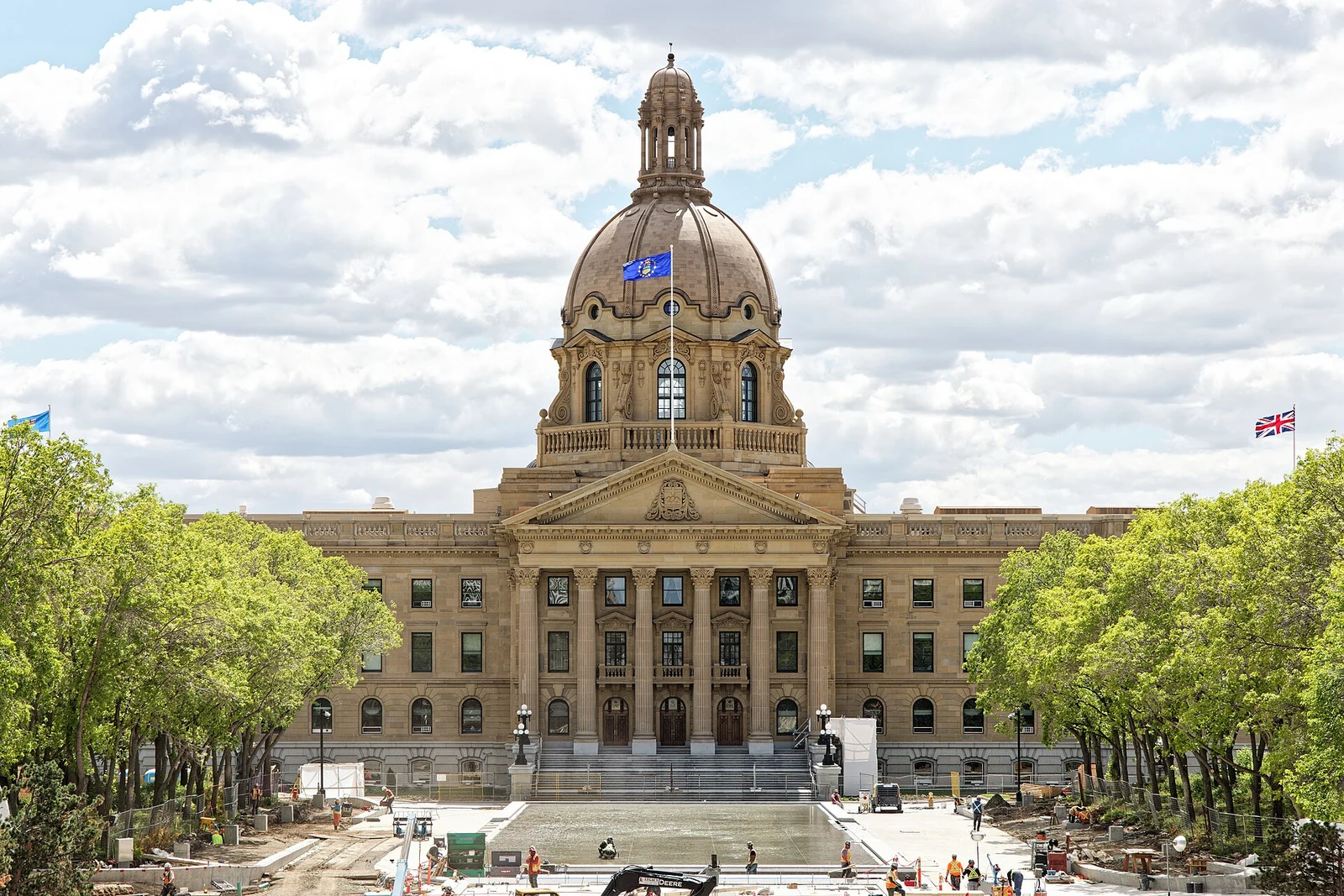
The October 19 referendum put ten questions to Alberta voters, set out by the provincial government in orders in council and published by Elections Alberta. Nine were yes-or-no questions on subjects that included immigration, eligibility for provincially funded programs and proposed changes to the Constitution of Canada. The tenth, Question 10, offered a choice between two options: that Alberta should remain a province of Canada, or that the Government of Alberta should commence the legal process required under the Constitution to hold a binding provincial referendum on whether Alberta should separate from Canada. The order in council setting that question directed that its result would not be binding. It is that tenth question, and the direction it asked Albertans to take, that the Prime Minister’s statement answers.
What the statement commits to
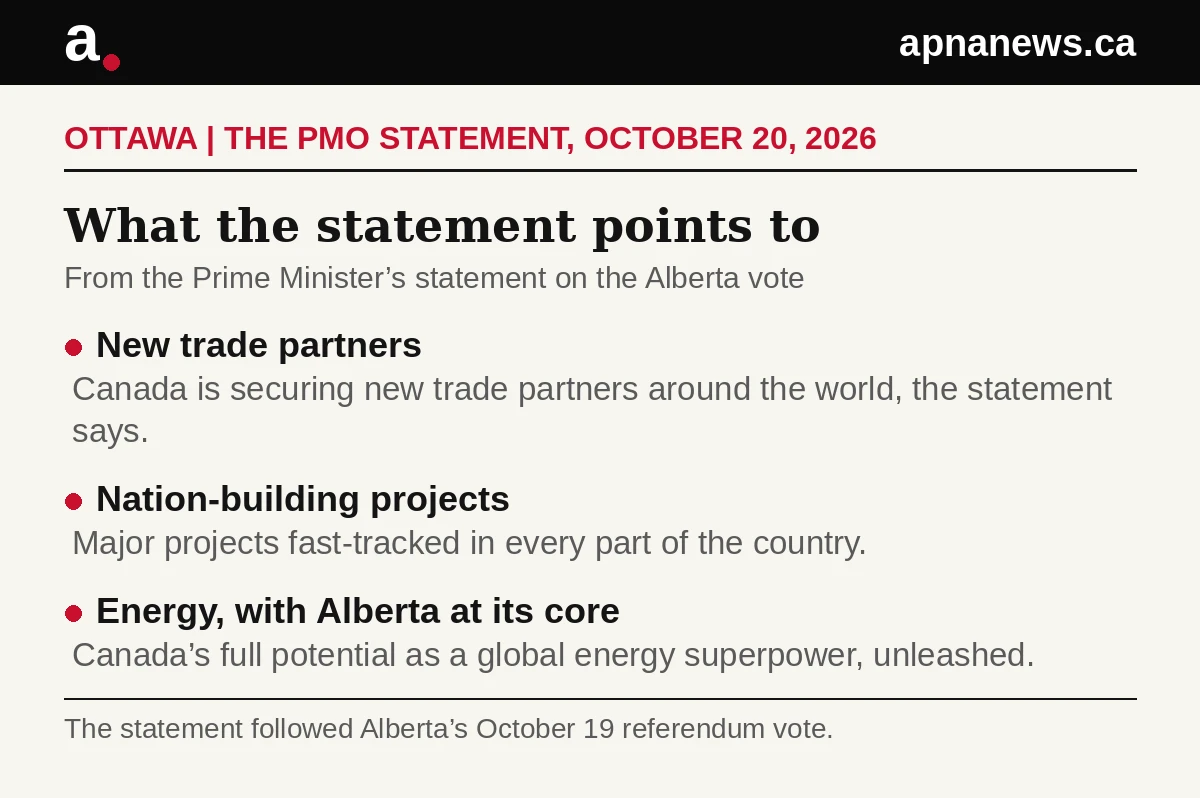
The statement itself is brief, but it sets out three themes the Prime Minister says now define the national agenda, each of them with direct consequences for British Columbia.
First, trade. Canada is securing new trade partners around the world, the statement says, part of a wider federal push to broaden the markets Canadian goods can reach. For British Columbia, that push runs through the province’s ports, rail lines and highways, and through the warehouses, trucking firms and logistics businesses that employ thousands of people in Surrey’s industrial neighbourhoods, including Port Kells, Newton and Campbell Heights.
Second, projects. Canada is fast-tracking major, nation-building projects in every part of the country, the statement says. It names no projects, attaches no dollar figures and sets no timelines. For B.C. readers, the commitment matters because the same fast-track approach will help decide which ports, energy corridors and transportation projects move first, and how much construction and trades work flows from those decisions in the Lower Mainland.
Third, energy. The statement says Canada is unleashing its full potential as a global energy superpower, with Alberta at its core. It is the only province-specific commitment in the text, and it places Alberta’s energy sector at the centre of the economic plan the Prime Minister is describing. British Columbia is tied to that sector directly: Alberta energy products move toward market through pipelines, rail lines and coastal terminals in this province, so decisions about production in Alberta become decisions about volumes, jobs and revenue on this side of the Rockies.
Why it matters for Surrey
A vote to begin the separation process would not have ended the story. It would have opened years of legal process, negotiation and uncertainty, occupying Ottawa, Edmonton and every provincial capital, with a second, binding referendum still to come. That process is now off the table, and in its place the Prime Minister is pointing to an agenda of trade, projects and energy development. For Surrey, one of the fastest-growing cities in the country, the practical stakes sit in the local economy. The trucking, warehousing and port-linked businesses spread across the city’s industrial areas plan around trade volumes and construction cycles, and both depend on a stable federation and a federal government whose attention is on building rather than on a constitutional fight. The statement also lands in a city where a large share of residents arrived in Canada within a generation, families whose lives are built on the stability of the country they chose.
What happens next
Carney closed the statement by calling Canada greater than the sum of its parts, and by saying the opportunity now is to make the country better for everyone who lives in it. What the statement does not contain is a program: no projects are named, no money is attached and no timelines are set. The follow-through to watch is the final tallies on all ten referendum questions, the Alberta government’s own response from Edmonton, and the first federal announcements that turn the statement’s three themes into named decisions. Until then, the statement stands as Ottawa’s marker on the week: the separation question was asked, the Prime Minister says it has been answered, and his government intends to govern on that basis.
Sources: Prime Minister of Canada, “Statement by Prime Minister Carney on Albertans choosing to build a stronger Canada, together,” October 20, 2026 (pm.gc.ca); Elections Alberta, referendum questions, Orders in Council 160/2026 and 110/2026 (elections.ab.ca).
Advertisements