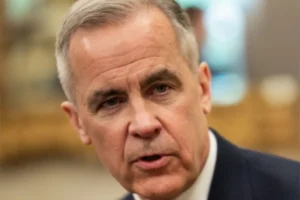


MONTRÉAL, Que. - Canada and the European Union have launched a new Alliance for the Future at their 21st summit in Montréal, a partnership Prime Minister Mark Carney says will deliver more choice and lower costs for families, new export markets for businesses, and greater opportunities for young people to live, work and study on either side of the Atlantic.
Carney was joined at the October 29 to 30 summit by European Council President António Costa and European Commission President Ursula von der Leyen. In parallel with the alliance, Canada and the EU are working toward the deepest possible partnership short of accession, with Canada becoming the European Union’s first Associate Member. The substance, scale and scope of that form of membership are to be determined over the coming months, and the leaders intend to conclude those negotiations when Carney attends European Council meetings in June, after a meeting of the EU’s College of Commissioners and the federal Cabinet in Canada in March.

The leaders announced more than twenty new measures. On affordability, Canada and the EU concluded negotiations toward a new Canada-EU Competition Agreement, so competition authorities on both sides can crack down on anti-competitive practices by companies operating across the Atlantic. They also plan to connect Canada’s and the EU’s instant payment systems, and to launch a joint working group on opening their banking, insurance and fintech markets further to each other.
On opportunity, Canada and the EU concluded a new Canada-EU Digital Trade Agreement, Canada’s first agreement dedicated entirely to digital trade, which the government says will make it easier for Canadian businesses to sell goods and services online across Europe. Canadian researchers, innovators and businesses will also get access to JUPITER, one of the world’s most powerful supercomputers, through Canada’s membership in the European High Performance Computing Joint Undertaking. Negotiations are launching to expand Canada’s participation in Erasmus+, Europe’s student and skills exchange program, and to join the next Horizon Europe research program.
On sovereignty, the announcements include a second SAFE contract worth more than $44 million, under which Montréal-based Galvion will provide military helmets to Latvia, and up to $2.5 billion in financing for Alberta-based De Havilland to dramatically increase waterbomber production capacity, helping European partners and Canada fight wildfires. Canada also signed a new treaty framework with the European Investment Bank to allow the bank to invest in Canadian critical minerals projects, and the two sides will work toward a raw materials stockpiling and investment framework.
Looking further ahead, Canada and the EU will take first steps toward a new transatlantic data cable for a direct, secure route for rapid data exchange, and will study whether increased liquefied natural gas exports are viable. The EU is Canada’s second-largest global trading partner for goods and services, with a total value of approximately $178 billion in 2025, according to the Prime Minister’s Office.
“Our Alliance with the European Union is built on shared history, common values, and mutual respect,” Carney said. “They are the foundation on which we move ever closer together to give our citizens more choice, more opportunity, and a more affordable future.”
For Canadians, the practical effects will arrive in stages: some agreements are concluded, while others, including the associate membership itself, the Erasmus+ expansion, the data cable and the LNG assessment, are negotiations or studies that are only beginning. This article does not present any of those as done deals.
(Source: Prime Minister of Canada news release, October 30, 2026)