

For about three hours on Friday afternoon, almost nothing took off in the United States. The Federal Aviation Administration ordered every airport in the country to hold its departing flights after a communications failure hit the control centers that guide planes between airports, then released departures in stages as the centers recovered. By the time the FAA’s own status board cleared, more than 10,000 flights had been delayed and 2,500 canceled, and the disruption had spread north: Canada-US flights were held or delayed at airports across Canada, even though Canadian air traffic systems were never affected.

Live updates
The latest official posts on the ground stop, newest first. This section is updated as officials and airlines post.
Update, 8:19 p.m. ET, November 13, 2026: The FAA has formally cancelled the nationwide ground stop. Advisory 005 from the FAA Command Center, issued at 8:19 p.m. ET, states that the nationwide ground stop has been cancelled. Transportation Secretary Sean Duffy said at the White House briefing that the airspace has been opened up, with the centers and TRACONs operational.
https://www.fly.faa.gov/ois/oisedit/adv_oisedit_dis?number=005&day=11142026
Timeline: how Friday unfolded
All times Eastern, with Pacific in brackets.
- October 1, 2026: The US federal government shutdown begins. About 13,000 air traffic controllers keep working without pay.
- November 5: Transportation Secretary Sean Duffy and FAA Administrator Bryan Bedford announce emergency flight cuts at 40 major US airports, a safety measure to ease pressure on unpaid controllers.
- November 7 to 14: The cuts step up from 4 percent of domestic flights, and were scheduled to reach 10 percent on November 14. The shutdown ends on November 12, after 43 days, the longest in US history, but the FAA flight-cut order is still in force on Friday.
- 3:28 p.m. ET (12:28 p.m. PT): The FAA ground-stops flights at Chicago O’Hare over an equipment outage. Midway follows at 3:31 p.m. ET.
- 3:54 p.m. ET (12:54 p.m. PT): Advisory 111. The FAA’s Command Center ground-stops every airport in the country, until further notice.
- 4:16 p.m. ET (1:16 p.m. PT): Duffy confirms the stop publicly and blames a communication issue at all Air Route Traffic Control Centers.
- 5:02 p.m. ET (2:02 p.m. PT): The FAA says on X that a temporary telecommunications outage led it to halt flights out of an abundance of caution, and that every flight has been accounted for.
- 5:46 p.m. ET (2:46 p.m. PT): Advisory 120. The stop remains in effect, but departures will be released in stages as en route facilities recover.
- 6:00 p.m. ET (3:00 p.m. PT): FlightAware counts more than 10,000 US flights delayed and 2,500 canceled, figures reported by the Associated Press.
- 6:55 p.m. ET (3:55 p.m. PT): The FAA’s National Airspace System status board no longer shows a nationwide ground stop in force. Delay programs remain at several airports.
- 8:19 p.m. ET (5:19 p.m. PT): Advisory 005. The FAA cancels the nationwide ground stop.
- Still to come, 11:00 p.m. ET (8:00 p.m. PT): The FAA’s next scheduled update.
What the FAA ordered
The order came in Advisory 111 from the FAA’s Air Traffic Control System Command Center, titled “National Ground Stop.” It reads: “Due to extraordinary circumstances and for reasons of safety. Attention all aircraft operators, by order of the Federal Aviation Command Center all airports are ground stopped. All departing traffic should remain ground stopped until further notice. Inbound international flights will be managed on a case by case basis.”
The advisory’s window runs to 4:00 a.m. UTC on Saturday, November 14. A follow-up advisory, number 120, issued at 5:46 p.m. ET, gives the reason as a communications failure and says: “The FAA Command Center ground stop remains in effect. As enroute facilities recover, flights will be allowed to depart through coordination with the Air Traffic Control System Command Center.” The FAA’s next update is expected at 11:00 p.m. ET.
By 6:55 p.m. ET, the FAA’s National Airspace System status board no longer showed a nationwide ground stop in force. The FAA formally cancelled the stop at 8:19 p.m. ET in Advisory 005, and ground delay programs remained in place at several airports on Friday evening. At San Francisco International Airport, Pacific-bound flights, including services to Hawaii and Asia, were cleared to depart from 3:00 p.m. PT.
Why a communications failure stops everything
The FAA’s 22 Air Route Traffic Control Centers are the facilities that handle aircraft at cruising altitude, in the long stretches between airports. A flight is handed from one center to the next as it crosses the country, and the centers coordinate constantly, by voice and by data, so that every plane stays separated from every other plane.
A telecommunications outage at those centers breaks that chain. If controllers cannot reliably talk to each other and hand flights off, the safe option is to stop adding new flights to the system. That is what a ground stop does: planes stay at the gate, where they are safe by definition, while flights already in the air, which the FAA says have all been accounted for, continue to their destinations and land.
The release works the same way in reverse. Under what the FAA calls a tiered approach, departures are allowed center by center, as each recovering facility confirms it can handle traffic again, with the Command Center coordinating the sequence. It is slower than a single all-clear, but it avoids flooding a half-recovered system.
What officials are saying
Transportation Secretary Sean Duffy, on X: “The FAA issued a nationwide ground stop for all U.S. airports following a communication issue impacting all Air Route Traffic Control Centers. FAA technicians are investigating the issue. We will provide immediate updates as we have them.”
The FAA, on X: “There has been a temporary telecommunications outage. Out of an abundance of caution all flights have been halted. Every flight has been accounted for and international flights will be handled on a case by case basis.”
Homeland Security Secretary Markwayne Mullin told reporters there is no indication the outage was caused by a national security threat or an attack, and that officials are still working to determine the root cause. Mullin also said the telecommunications issue does not extend to the entire United States, with two areas still able to communicate, and that other countries’ aviation systems do not appear to be affected.
Federal Transport Minister Steven MacKinnon, on X, said the government is aware of the US ground stop, is monitoring the situation closely and remains in contact with NAV Canada. Canadian systems are operating normally, he said, but travel to the United States may be disrupted.
NAV Canada, which runs Canada’s air traffic control, said on X: “Our systems are operating normally and there is currently no impact to our operations. We continue to support the safe movement of air traffic in our airspace, including any aircraft that may be diverted.”
Homeland Security Secretary Markwayne Mullin told reporters at the White House briefing: “The President has declared this a national emergency. And now we have to have Congress act and fund it.” On the cause, Secretary Duffy described old switches, old routers and 1980s copper lines, saying: “It’s an old system that went down and went down everywhere. It got overloaded.” Mullin said officials had seen zero evidence that the outage was a cyber attack, and that the investigation was continuing and nothing had been ruled out.
What the airlines are saying
United Airlines said flights already airborne will continue, and that “new domestic flights will not depart while the FAA ground stop remains in place.” Its international departures are being managed on a case-by-case basis by the FAA.
American Airlines said it expects disruption for the rest of Friday, adding: “It will be all hands on deck across American to get customers on their way as soon as possible when the FAA lifts this nationwide ground stop.” In a later post at 6:57 p.m. ET, American said some of its flights were receiving clearance for departure.
Delta Air Lines said: “No Delta flights are departing at this time and flights currently enroute will continue to their destinations.” Delta has also issued a travel waiver for affected passengers.
Alaska Air Group said flights within Alaska are still cleared to operate, neighbour island service in Hawaii is unaffected, and departures from the West Coast to Hawaii are continuing. Alaska has published a travel waiver allowing affected passengers to rebook through November 16 without change fees.
Air Canada said its flights to and from the United States are impacted by the ground stop, and that services to and from the Caribbean and South America could also be affected, because those routes cross US airspace.
WestJet said in a statement on its website: “The safety of our guests and crew is always our highest priority. As the FAA works to address the issue affecting air traffic control communications at U.S. airports, WestJet is following all regulatory direction. We are closely monitoring the situation and will keep guests informed of any impacts to their travel plans.”
What it means in Canada
Canadian airspace was never part of the stop. NAV Canada’s systems are operating normally, and flights within Canada are not affected. What is affected is anything that touches the United States: flights from Canadian airports to US destinations, US flights arriving in Canada, and some international flights whose routes cross US airspace, including services between Canada and the Caribbean and South America.
Later on Friday, NAV Canada said it was implementing traffic management measures at Toronto Pearson, Montreal-Trudeau, Calgary and Vancouver to safely manage traffic volumes. It said travellers should expect delays and check with their airline, and that its systems are operating normally.
Vancouver International Airport said it is seeing delays for US-bound departures, as well as some international flights that would fly over the United States. Domestic flights within Canada are not impacted. The airport advises travellers to check their flight status with their airline or at yvr.ca before coming to the airport.
Toronto Pearson said flights between Toronto and the United States are currently impacted, and that there are currently no scheduled US-bound departures or arrivals. Montreal-Trudeau airport said all flights to and from US airports are suspended until further notice.
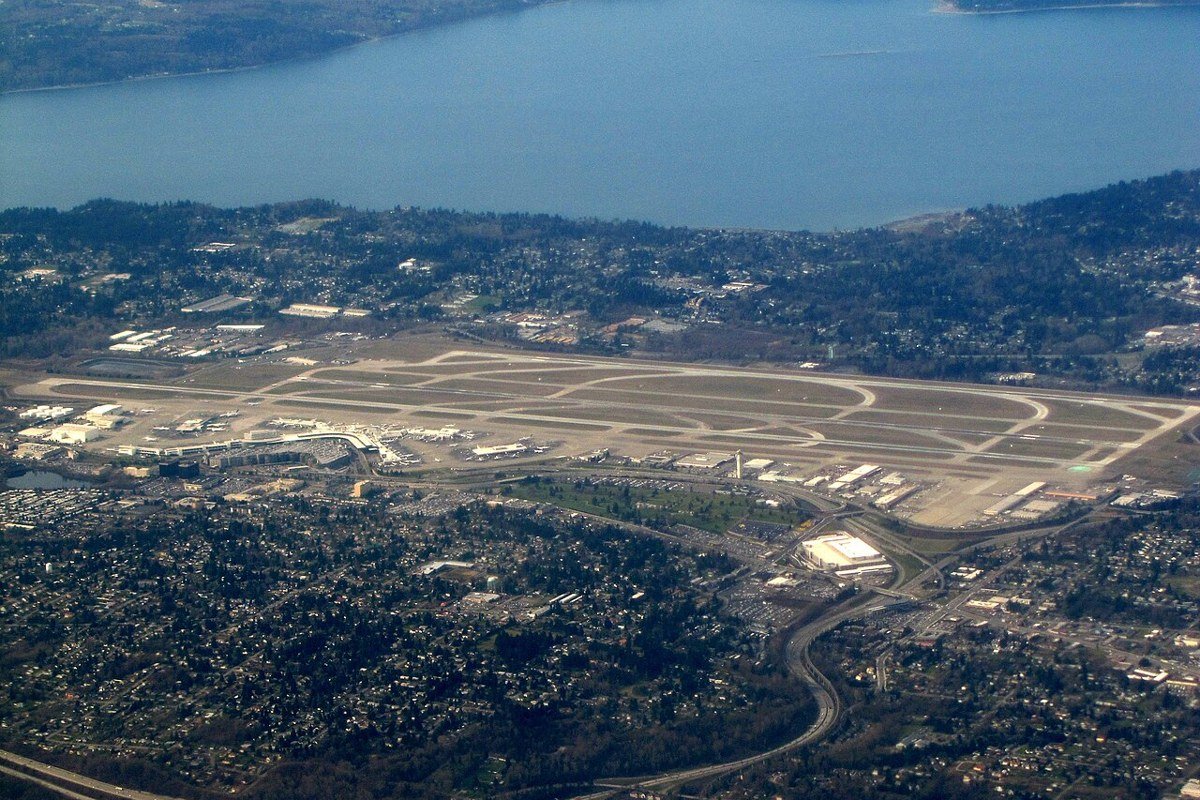
At Seattle-Tacoma International Airport, the closest major US hub to the Lower Mainland and a common connection point for Surrey travellers, the Port of Seattle said departures were temporarily suspended under the FAA order and advised passengers to check directly with their airlines.
For a Surrey traveller, the practical picture is this: a flight to a US destination tonight is likely delayed or canceled even though the stop itself has been released, because aircraft and crews are out of position across the continent. A flight through a US hub to somewhere else carries the same risk. A flight within Canada does not.
If you are flying tonight or this weekend
Check your flight with your airline before you leave for the airport, and keep checking, because departure times are moving as the recovery rolls out. If your flight is canceled, use your carrier’s travel waiver: the airlines have issued flexible rebooking policies for this event, and Alaska’s, for example, allows rebooking through November 16 without change fees. Expect recovery delays to run into Saturday even where flights are operating, as airlines work aircraft and crews back into position.
The scale, and how rare this is
As of 6:00 p.m. ET, more than 10,000 flights had been delayed and 2,500 canceled in the United States, according to FlightAware figures reported by the Associated Press. About 11,000 flights had been scheduled to depart US airports after 4:00 p.m. ET on Friday, according to flight data firm Cirium, as reported by CNBC.
A nationwide halt to departures is exceptionally rare. Friday’s order is the first since January 2023, when a failure in the FAA’s pilot notification system, known as NOTAM, grounded US departures for about two hours. Before that, the only comparable shutdown was on September 11, 2001, when US airspace was closed after the terror attacks.
Friday’s stop also landed on a system already under strain. The FAA’s shutdown-era flight cuts at 40 major airports were still in force, and controllers had only just come off more than a month of working without pay.
What happens next
The FAA says its technicians are investigating the communications failure. No official has named a cause, and nothing stronger than the officials’ own words is confirmed: a telecommunications outage at the en route centers, with no indication of an attack.
The FAA’s next update is expected at 11:00 p.m. ET on Friday. This story will be updated when it lands.
For travellers, the weekend question is recovery speed. Airlines say getting customers on their way is the priority once departures flow normally, but a three-hour nationwide stop on a Friday evening, on top of a week of shutdown-era cuts, is the kind of disruption that takes days, not hours, to fully unwind.
(Source: U.S. Federal Aviation Administration, November 13, 2026)