
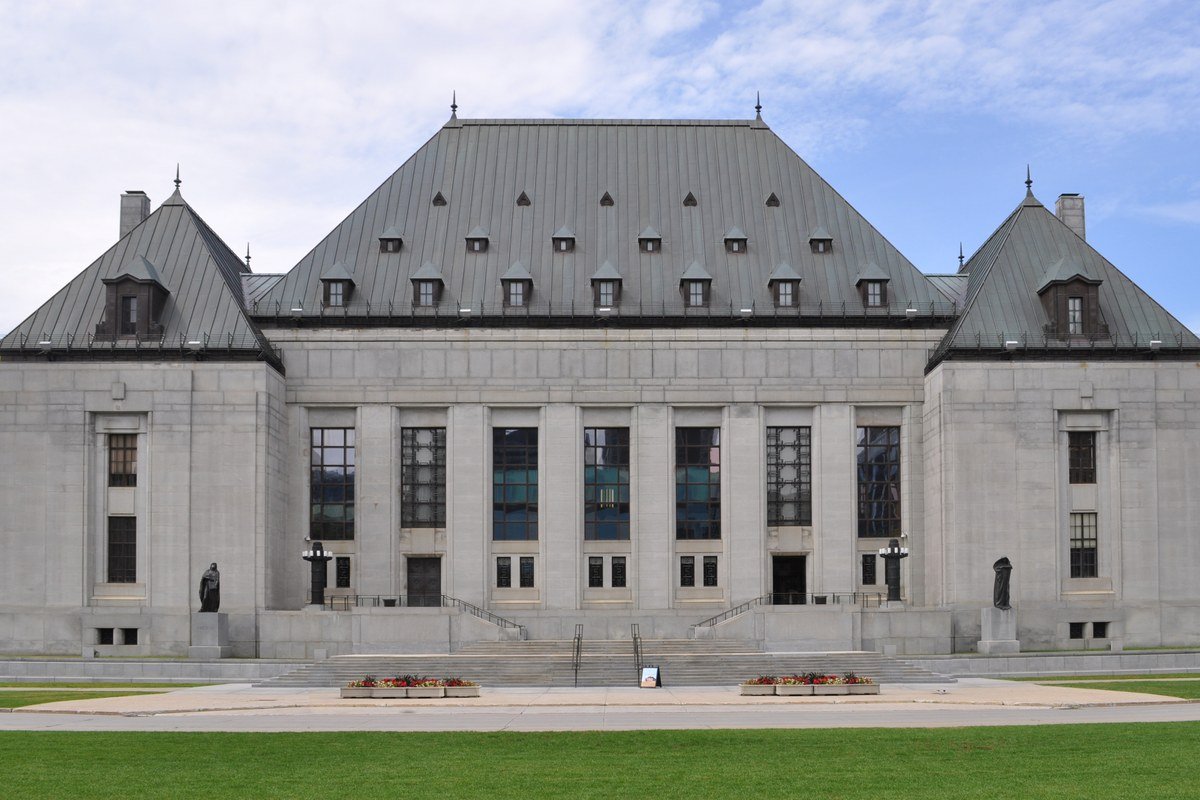
OTTAWA - The Supreme Court of Canada has upheld Quebec’s secularism law, confirming on Friday that the province validly used the notwithstanding clause to shield Bill 21 from Charter challenges and that its ban on religious symbols for public servants in positions of authority, including teachers, stays in force.

In English Montreal School Board v. Quebec (Attorney General), 2026 SCC 41, the Court dismissed the appeals brought by the English Montreal School Board and the other parties who challenged the law, and it dismissed Quebec’s cross-appeal. The Act respecting the laicity of the State, commonly called Bill 21, is valid, with one exception: section 8 of the law infringes democratic rights to the extent that it applies to members of Quebec’s National Assembly who wear a face covering for religious reasons.
Quebec used the override power validly, the Court finds
The Court held that Quebec’s legislature validly used the override power set out in section 33 of the Canadian Charter of Rights and Freedoms and in section 52 of Quebec’s Charter of human rights and freedoms when it enacted Bill 21. Looking at the text of section 33, its context, and its purpose and effects, the Court confirmed the interpretation it adopted in its 1988 decision in Ford v. Quebec (Attorney General): the exercise of the override power is not subject to any limit other than the limits expressly written into the provision itself.
The holding that Quebec used the override validly was supported by Chief Justice Wagner and Justices Karakatsanis, Côté, Rowe, Kasirer and O’Bonsawin.
What the ruling means for teachers in Quebec
Because the override stands, the law’s prohibition on wearing religious symbols continues to apply to public servants in positions of authority in Quebec, including teachers. For a Sikh teacher, that prohibition covers the turban. For a Muslim teacher, it covers the hijab. The practical effect of Friday’s ruling is that the rules in place since Bill 21 was enacted remain the rules: a teacher in a Quebec public school who is in a position covered by the law cannot wear religious symbols on the job.
The one provision that failed: section 8 and democratic rights
Section 3 of the Charter protects democratic rights, including the right of citizens to vote in an election and to run for election as a member of a legislative body. The Court ruled that section 8 of Bill 21 infringes section 3 to the extent that section 8 applies to members of the National Assembly of Quebec. Section 8 prevents people elected to the National Assembly whose religious beliefs require them to wear a face covering from exercising their right to sit in the Assembly and to take part in the legislative process. That application of the law infringes the democratic rights the Charter guarantees.
The section 3 ruling was supported by Chief Justice Wagner and Justices Karakatsanis, Côté, Rowe, Kasirer, Martin and O’Bonsawin.
Courts can still declare a law inconsistent with the Charter
The Court also confirmed that invoking the override does not prevent a court from ruling on a law’s consistency with the Charter. That power, the Court said, comes from the principle of the separation of powers and the inherent jurisdiction of the courts to determine the legal effect of legislation and to grant a remedy. Justices Karakatsanis, Kasirer, Martin and O’Bonsawin held that a declaration of inconsistency remains available even when the override has been used.
In this case, however, the Court made no declaration. Chief Justice Wagner and Justices Côté, Rowe and Martin held that no declaration should be made here.
Sections 28 and 23 do not change the result
Section 28 of the Charter states that the rights and freedoms it guarantees apply equally to male and female persons. The Court held that section 28 serves to guide how the other Charter rights are understood and applied, but that it does not, on its own, create a distinct right that could be invoked to challenge a law. Bill 21 therefore cannot be invalidated because of section 28.
On minority language education rights, the Court ruled that Bill 21 does not infringe section 23 of the Charter, which protects the right of English-speaking and French-speaking minorities to have their children educated in their language and to participate in managing their schools. The Court recognized that Bill 21 could limit the ability of English-language school boards to recruit, retain, transfer or promote certain people in their schools. It determined, however, that it had not been demonstrated that those restrictions undermine the specific linguistic or cultural interests of the English-speaking minority that section 23 is intended to protect.
The rest of the challenge also failed
The Court concluded that Bill 21 does not infringe certain pre-Confederation statutes, is not contrary to the constitutional division of legislative powers between Parliament and the provincial legislative assemblies, and is not inconsistent with the constitutional architecture. It also upheld the Court of Appeal’s finding that the government’s count of the number of employees wearing religious symbols does not violate the Charter.
What this means for readers in Surrey and B.C.
Bill 21 is a Quebec law. Friday’s ruling does not change any law in British Columbia, and teachers and other public servants in Surrey and across B.C. are not covered by it. What the decision settles for the whole country is the reach of the notwithstanding clause itself: a legislature that invokes the override in the form section 33 requires faces no additional limits from the courts, while a court may still declare that a law is inconsistent with the Charter.
(Source: Supreme Court of Canada, Case in Brief, English Montreal School Board v. Quebec (Attorney General), 2026 SCC 41, November 27, 2026)

You Might Like