
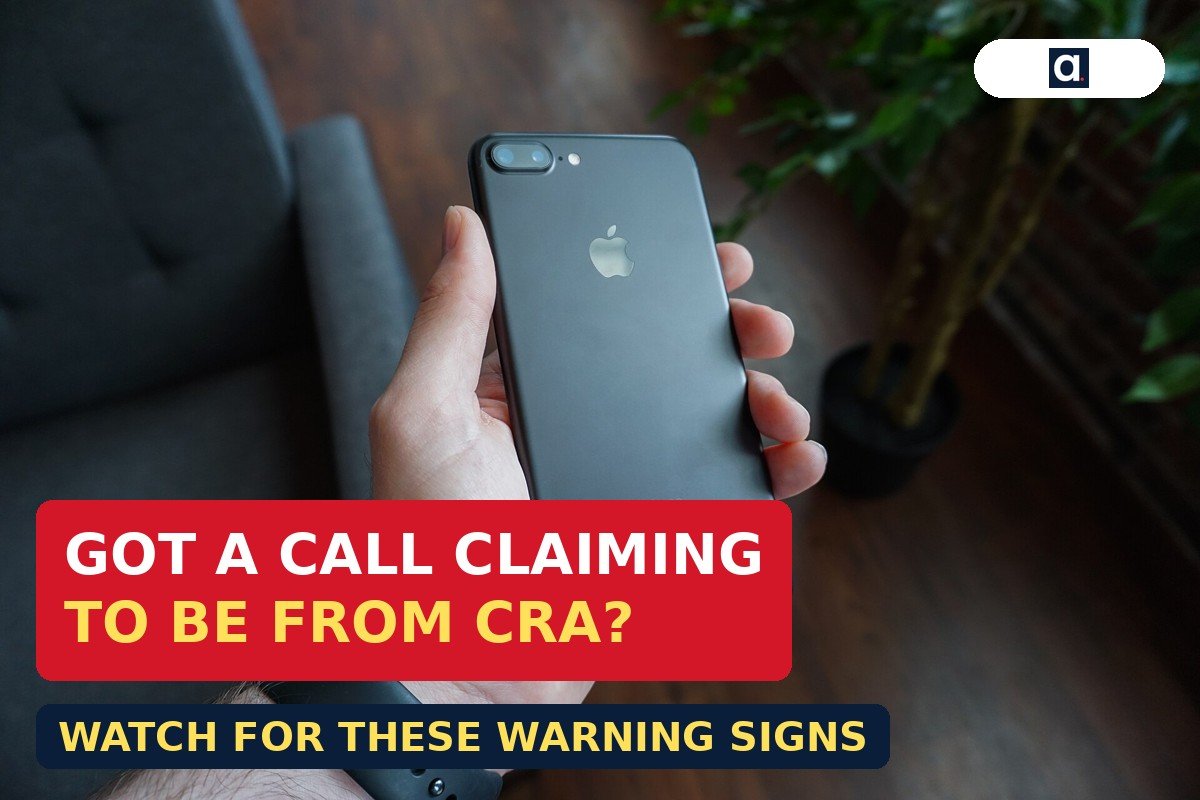
SURREY, B.C. - The call sounds official. The voice says it is the Canada Revenue Agency, there is a problem with your tax return, and unless you act now there will be serious consequences. It is one of the most common fraud scripts in the country, and the CRA’s own guidance page, “Recognize a scam,” gives you the test that ends it: there are things the real CRA simply never does.
Five things the CRA will not do
1. The CRA will not send refunds or payments by e-transfer or text message.
2. The CRA will not provide or accept payments by cryptocurrencies.
3. The CRA will not demand or pressure immediate payment by Interac e-transfer, cryptocurrencies, prepaid credit cards, or gift cards from any type of retailer.
4. The CRA will not threaten to deport or arrest you, or put you in prison.
5. The CRA will not use aggressive or threatening language.

If a caller does any one of these, it is not the CRA, whatever the caller ID says. Phone numbers can be spoofed to look official.
What to do instead
Hang up. Then verify on your own terms: sign in to your CRA account online, or call the CRA on a number you get from its official website (1-800-959-8281 for individuals), never a number the caller gives you. If you owe money or there is a real problem, it will still be there after you check, and the real CRA does not punish people for checking.
Report the attempt, even if you lost nothing. The Canadian Anti-Fraud Centre takes reports at 1-888-495-8501 and at reportcyberandfraud.canada.ca. The scale is not small: Canadians reported approximately $351 million in fraud losses in the first six months of 2026 alone, and the Anti-Fraud Centre estimates only 5 to 10 per cent of fraud is ever reported.
What it means for you
The scam works on urgency and embarrassment, and newcomers and seniors are frequent targets. Agree on a family rule now: nobody in the house pays anything, to anyone, because of a phone call, text or email, full stop. A real tax bill survives a night’s sleep and an independent phone call. A scam cannot.
(Source: Canada Revenue Agency, “Recognize a scam,” and Canadian Anti-Fraud Centre fraud trends, accessed November 7, 2026)
Apna News

You Might Like