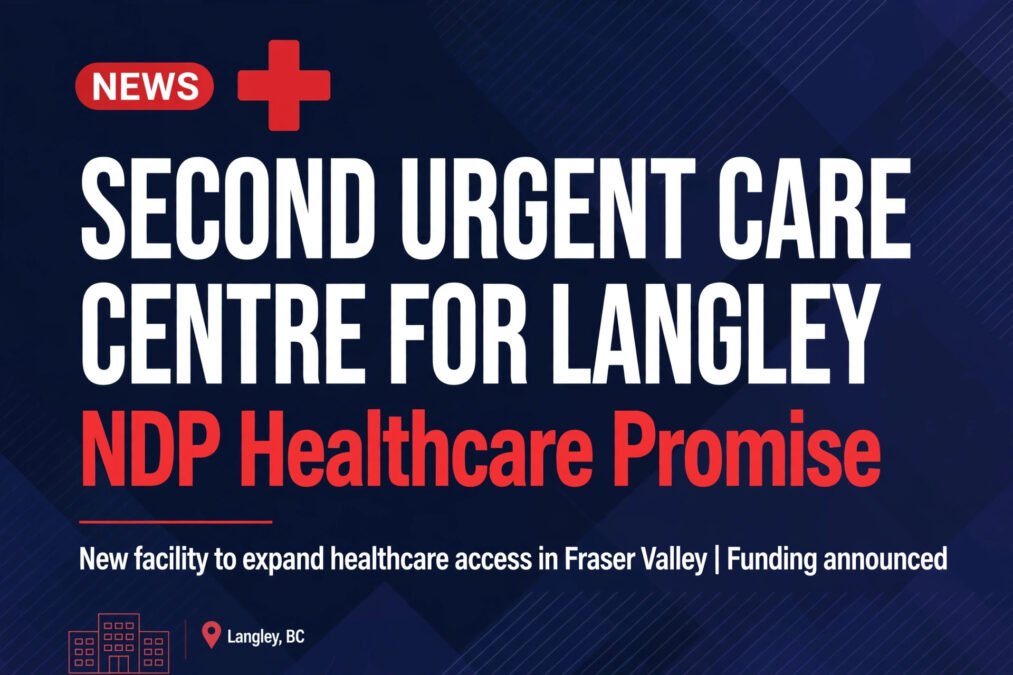
LANGLEY, B.C. - The BC NDP is promising a second Urgent and Primary Care Centre (UPCC) for Langley if re-elected on October 24, adding the community to a provincewide wave of new UPCC commitments announced on October 18.
The announcement is part of a larger NDP health care pledge that also includes new UPCCs for Oliver, the North Shore, South Vancouver, and Cowichan. The party framed the commitments as the next phase of its urgent care expansion, aimed at taking pressure off hospital emergency departments and giving residents same-day access to care without an appointment.

Urgent and Primary Care Centres are walk-in style clinics staffed by a mix of family doctors, nurse practitioners, registered nurses, and allied health professionals. They are designed to handle urgent but non-life-threatening issues such as sprains, minor infections, cuts that may need stitches, and flare-ups of chronic conditions. Patients can walk in or call ahead for same-day visits, and the centres also attach longer-term patients to primary care providers.
For Langley residents, the promise of a second centre is significant. Langley’s population has grown rapidly over the past decade, with both the Township and the City adding thousands of new homes. Existing primary care capacity has struggled to keep pace, and many residents report difficulty finding a family doctor. A second UPCC would give the community another front door into the health care system, particularly for people without a regular physician.
The NDP says the new UPCCs build on the 29 centres already operating across the province. The party has made urgent care access a central plank of its campaign, arguing that UPCCs reduce emergency room wait times by diverting patients who do not need hospital-level care. Health care advocates have generally welcomed the model, though some have raised questions about staffing, noting that recruiting enough doctors and nurse practitioners to fully staff new centres remains a challenge across British Columbia.
The announcement comes just six days before voting day, and health care is expected to be one of the decisive issues of the campaign. The BC Conservatives have countered with their own costed platform, released October 18, which includes a $1,000 tax cut, a ban on new TransLink car taxes, the Massey bridge project, and a new Surrey hospital. Voters in Langley, one of the fastest-growing parts of the Lower Mainland, will weigh both parties’ health care promises when they head to the polls on October 24.
The other communities named in the NDP’s UPCC wave reflect a mix of urban and rural needs. Oliver, in the South Okanagan, has faced persistent doctor shortages. The North Shore and South Vancouver are dense urban areas where emergency departments regularly see high volumes of patients who could be treated in urgent care settings. Cowichan, on Vancouver Island, has also struggled with primary care access.
Local reaction in Langley has been cautiously positive. Community members and municipal leaders have long called for more health infrastructure to match the area’s growth, including the long-discussed expansion of hospital services in the region. A second UPCC would not replace the need for hospital capacity, but supporters say it would give residents a faster option for everyday urgent needs and help connect unattached patients with ongoing primary care.
As with all campaign promises, the commitment is contingent on the NDP forming government after October 24. The party has not yet released detailed timelines for when the new centres would open or how much each would cost to build and staff. Those details will likely face scrutiny in the final days of the campaign.
Source: BC NDP
Advertisements